A sustainable house is not just about installing solar panels on a conventional roof. The term refers to a construction whose carbon footprint is controlled throughout its entire life cycle, from the extracted materials to demolition. Since January 2022, the environmental regulation RE2020 imposes carbon emission ceilings on new buildings in France, which will be tightened in stages until 2031, effectively pushing builders towards ecological alternatives to traditional concrete-steel pathways.
RE2020 and low-carbon materials: what the regulation really changes
RE2020 does not merely set energy performance thresholds. It introduces a carbon impact indicator over the complete life cycle of the building, a first in Europe at this scale. For individual houses, this means that the choice of construction materials weighs as heavily as insulation or heating in the regulatory calculation.
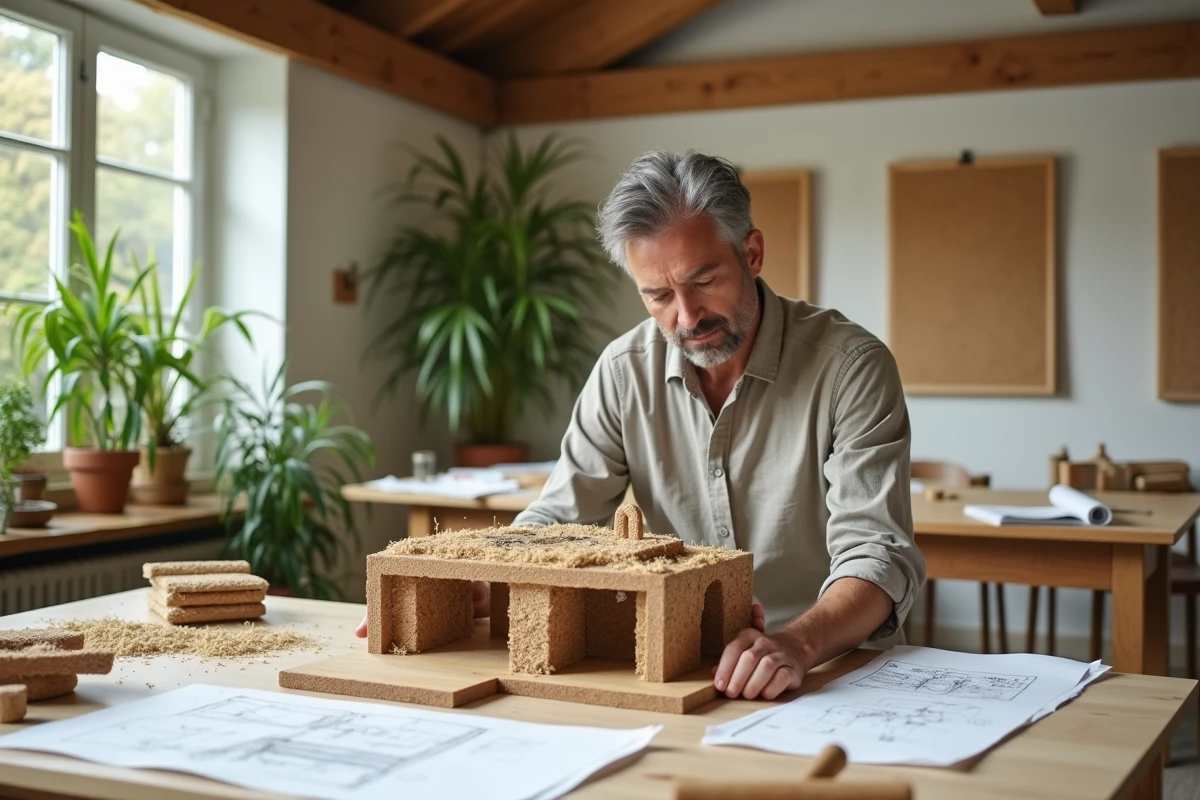
Biosourced materials (wood, hemp, straw, raw earth) mechanically benefit from this logic: their production emits little CO2, and some store carbon throughout the building’s lifespan. A wooden frame wall filled with straw has a radically different carbon balance than a concrete block wall, even before discussing thermal comfort.
The regulatory thresholds will gradually become stricter, making it relevant to integrate these pathways from the project’s design stage rather than waiting for the next deadlines. Several resources document the available pathways, notably on maisonsalternatives.fr where different construction systems are compared.
Wood construction and hybrid structures: beyond the classic frame
Wood remains the most accessible ecological material for an individual house. Two approaches coexist, with very different implications on the construction site and the final result.
Light wooden frame
This is the most common system. Wooden studs form the load-bearing structure of the walls, and the space between the studs receives insulation (wood fiber, hemp wool, compressed straw). The construction is quick, the walls are thin for equal performance, and prefabrication in the workshop reduces site uncertainties.
Hybrid wood-concrete structures
For projects that require large spans or multiple levels, some builders combine concrete floors with a wooden frame. This approach allows for retaining the thermal inertia of concrete (useful in summer) while limiting the total volume of materials with a high carbon footprint. RE2020 encourages this type of technical compromise, as it penalizes 100% concrete constructions without banning the material.
Hemp, straw, and raw earth: three pathways with high potential
These three materials share a common point: they are locally available in most French regions, which shortens supply chains and reduces transport impact.
- Industrialized hemp blocks: since 2022-2023, standardized products (blocks, sprayed hemp concrete) allow for the construction of load-bearing or infill walls with remarkable summer comfort, without air conditioning. Pilot sites in Brittany and New Aquitaine confirm the gains in thermal inertia under real conditions.
- Straw bale construction uses an abundant agricultural by-product as insulation in a wooden frame. The thickness of the walls (about 35-45 cm of straw) offers thermal and acoustic insulation that is hard to match with conventional insulators. The material must be protected from moisture with a coating, usually lime or earth.
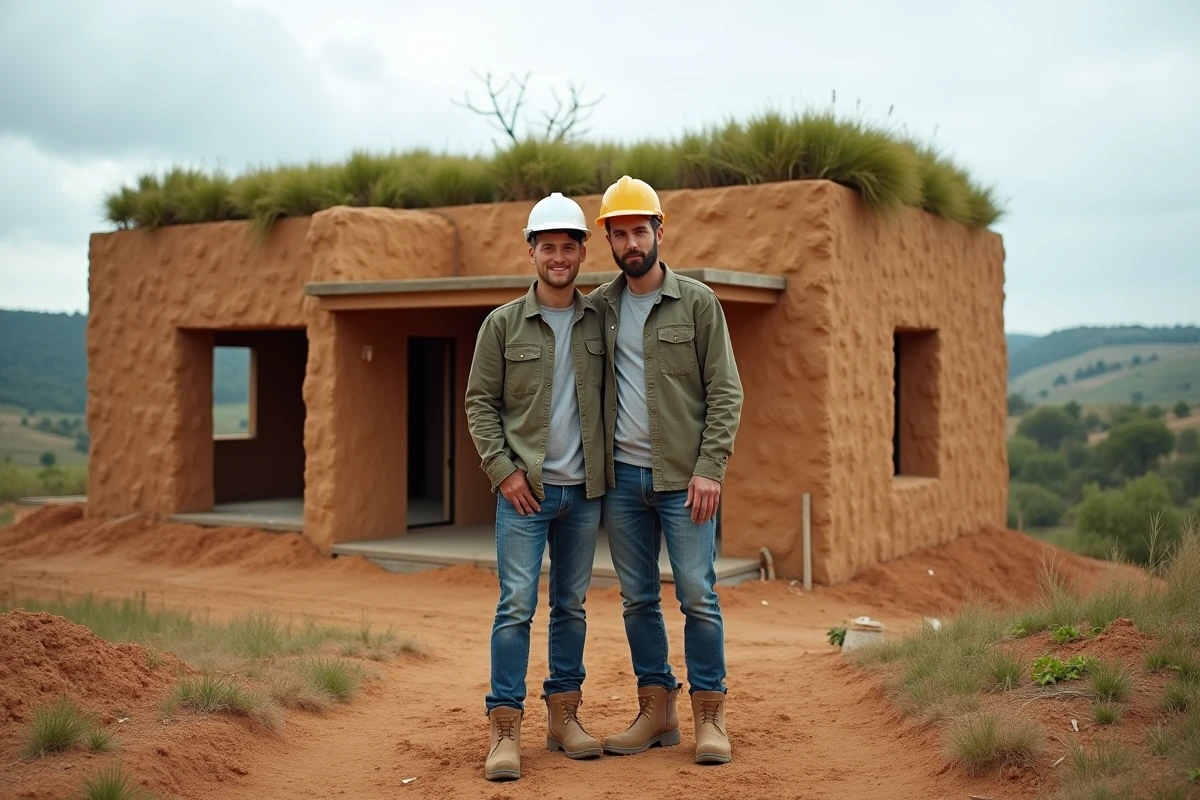
- Raw earth (rammed earth, cob, compressed earth bricks) is the oldest and most energy-efficient construction material. It naturally regulates indoor humidity. Its limitation: it does not insulate sufficiently on its own and must be combined with a biosourced insulator to meet current thermal requirements.
These three pathways can be combined. A wooden frame wall insulated with straw and coated with raw earth constitutes a coherent construction system, where each layer serves a specific function.
Ecological insulation: criteria for choosing between wood fiber, hemp wool, and cellulose wadding
The choice of insulation determines a significant part of the daily comfort and environmental balance of a sustainable house. Three biosourced options dominate the French market, each with distinct characteristics.
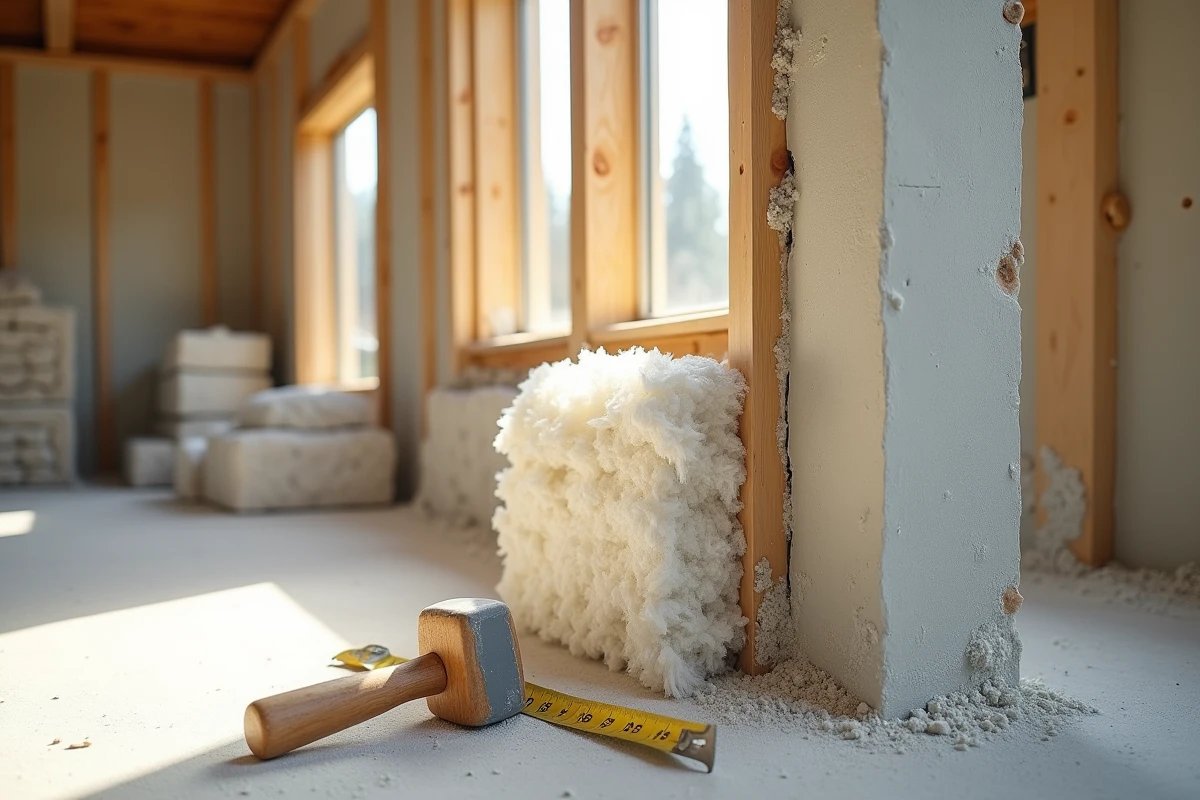
Rigid wood fiber panels excel in external insulation. Their high density provides good thermal lag, delaying the penetration of summer heat into the walls. Hemp wool, being more flexible, adapts better to attics and interior partitions. Cellulose wadding, made from recycled paper, is blown or injected into cavities and offers one of the most competitive performance/price ratios among ecological insulators.
- Thermal lag: wood fiber surpasses the other two, a decisive criterion in regions subject to high summer heat
- Installation: cellulose wadding requires blowing equipment, while wood fiber panels or hemp rolls can be installed manually
- Moisture sensitivity: hemp naturally resists moisture and mold, making it suitable for bathroom walls or rainy regions
None of these insulators is universally superior. The choice depends on the location within the house, the local climate, and the construction system chosen for the walls.
Designing an original house with ecological materials
Biosourced materials do not limit architectural forms. Sprayed hemp concrete allows for curved walls and textured facades that are difficult to achieve with concrete blocks. Raw earth allows for natural shades that vary according to the local clay, without additional paint or decorative coating. Wood, depending on its species and treatment, offers finishes ranging from the most refined contemporary to regional vernacular.
The originality of a sustainable house often lies in the raw expression of its materials rather than decorative additions. An exposed rammed earth wall tells the geology of the land. A visible solid wood frame from the inside structures the space as much as it decorates it.
The gradual tightening of RE2020 makes these choices less and less marginal. The pathways for ecological materials are becoming structured, artisans are being trained, and feedback from pilot sites confirms the technical viability of these alternatives. The next step for a concrete project remains to cross the construction system with the constraints of the land, climate, and available budget.