The Pays de la Petite Pierre concentrates, within a limited area of the Northern Vosges, a layering of intercommunal skills, environmental initiatives, and local economic sectors that most tourist guides only touch upon superficially. Here, we offer an analysis through the governance mechanisms and structuring projects that shape this territory.
Intercommunal Governance and Management of the Parc Naturel Régional des Vosges du Nord
The community of communes of the Pays de la Petite Pierre carries the administrative responsibility for a rural territory where the issues of biodiversity, water, and built heritage intersect with every planning decision. Its role goes far beyond waste collection or road maintenance: it coordinates network policies among member communes, articulates regional funding, and structures actions related to the Parc Naturel Régional des Vosges du Nord.
This park, classified as a biosphere reserve by UNESCO, imposes a precise regulatory framework on urban planning, forest management, and the protection of wetlands. The communes of the Pays de la Petite Pierre are directly integrated into this, which conditions their urban planning documents and infrastructure projects. The portal cc-paysdelapetitepierre.fr centralizes deliberations, calls for projects, and reports that reflect these daily decisions.
We observe that this dual oversight (intercommunal and park charter) creates a network of constraints and opportunities that is rarely described in mainstream content. Each agricultural building extension project, every discovery trail, or wastewater treatment plant goes through a stricter environmental filter than in neighboring intercommunalities outside the park perimeter.
Biodiversity and Water Management in the Vosges du Nord
Water resource management is the most structuring technical issue of the territory. The Vosges sandstone, which forms the local geological base, acts as a natural filter and feeds aquifers whose quality directly depends on forest cover and upstream agricultural practices.
Preservation actions are not limited to monitoring water catchments. They include the restoration of wetlands, the fight against invasive species in waterways, and the establishment of green and blue networks at the intercommunal level. These networks connect forest massifs to valley bottoms and condition the movement of wildlife.
- Restoration of riparian forests along the tributary streams of the Moder and Zinsel du Nord, to stabilize banks and limit water warming
- Regular naturalist inventories coordinated by the regional park, which feed into databases used in local urban planning documents
- Awareness programs for farmers to reduce inputs on plots at the head of watersheds
- Monitoring of lynx and large raptor populations, indicator species of the overall health of forest ecosystems
This foundational work, largely invisible to visitors, determines the territory’s capacity to maintain a natural setting that subsequently attracts hikers and families.
Built Heritage and the Château de La Petite Pierre: A Lever for Cultural Discovery
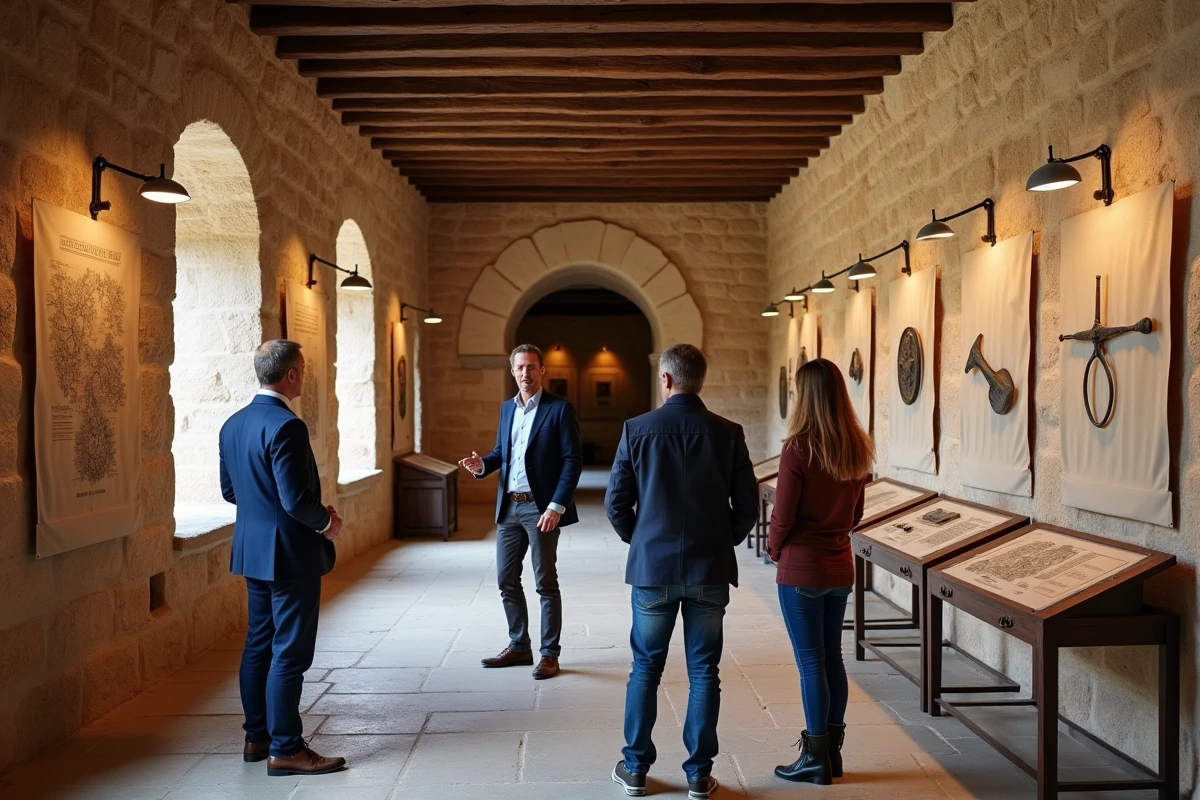
The Château de La Petite Pierre, perched on its sandstone spur, houses the Maison du Parc. This choice of location is not incidental: it physically anchors the environmental mission within a historical monument, creating a convergence point between medieval heritage and scientific mediation.
The history of the site dates back to a time when the road connecting Alsace to Lorraine passed through this strategic lock. The remains of the house known as the Païens, dated to the 16th century, testify to an occupation much older, possibly Roman. This historical depth nourishes a network of interpretation trails that blend landscape reading, sandstone geology, and heritage narratives.
Beyond the castle, the territory preserves a remarkable Jewish heritage: cemeteries, former synagogues, and traces of a community life that marked several villages in the Pays de Hanau and La Petite Pierre for centuries. This often-overlooked heritage is the subject of specific discovery circuits promoted by the intercommunal tourist office.
Outdoor Activities and Marked Trail Network in Northern Alsace
The hiking network of the territory relies on the markings of the Club Vosgien, but the community of communes is involved in the maintenance of reception infrastructures: starting parking lots, directional signs, picnic areas. The Maison des Sports et Loisirs de Nature, located locally, serves as a one-stop shop for practitioners.
The Vosges sandstone directly shapes the field experience. Trails carved into the rock, natural rock shelters, rocks sculpted by erosion: geology is not a backdrop; it structures the routes. The paths around the Altenbourg or in the Erckartswiller forest offer an accessible geological reading without specialized equipment.
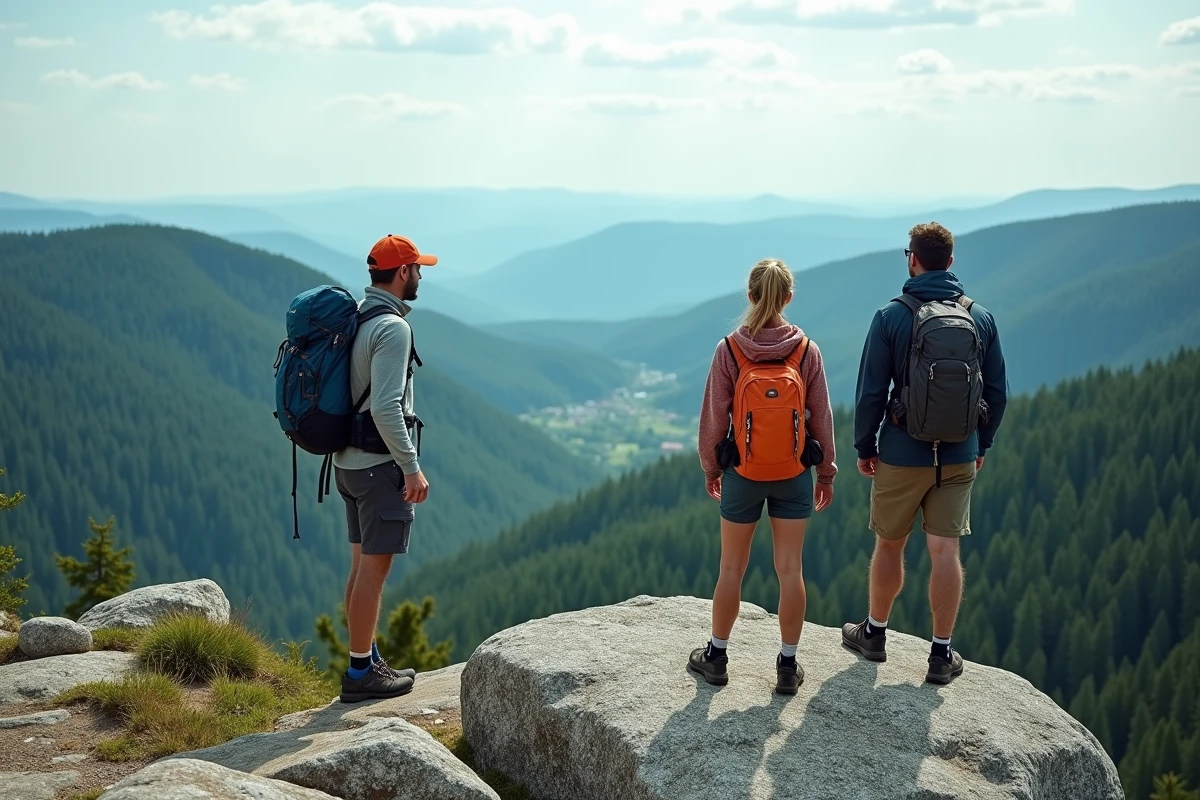
- Marked hiking trails at various difficulty levels, from family paths to ridge crossings
- MTB circuits integrated into the departmental scheme, with single tracks in the undergrowth on sandstone substrate
- Nature outings led by regional park facilitators, focused on forest wildlife or the botany of peat bogs
The increasing use of these trails raises the question of carrying capacity, a topic that local elected officials address by dispersing flows rather than restricting access.
Local Initiatives and Economic Dynamics of the Pays de la Petite Pierre
The territory does not solely rely on nature tourism. Craft and agricultural sectors are maintained, supported by short circuits and local demand for quality products. Organic farming is progressing on farms located on the outskirts of forest massifs, where the constraints of the regional park align with market expectations.
Social and solidarity economy projects are also emerging, supported by regional initiatives. Shared workshops, third places in rural areas, programs to maintain local services in communes with fewer than five hundred inhabitants: these initiatives reflect a desire to keep the territory inhabited and active beyond the tourist season.
The Pays de la Petite Pierre remains a territory where the density of public initiatives (regional park, intercommunality, tourist office) compensates for the low demographic density. This institutional architecture, sometimes seemingly cumbersome, produces a network of coherent projects that distinguishes this corner of the Northern Vosges from many comparable rural areas.