A scarf that slips off one shoulder lower than the other, a belt that compresses instead of structuring, a bag whose strap falls awkwardly on a short torso: we have all experienced this discrepancy between an accessory spotted in a shop window and its reality once worn.
Trendy accessories only work if they adapt to the body that wears them. It is this practical logic that changes the way we choose jewelry, bags, or glasses on a daily basis.
Accessories and body shape: adapting the piece to the body, not the other way around
The choice of an accessory is based on concrete physical parameters: neck length, shoulder width, bust-hip ratio. Ignoring these data risks the opposite effect of what is sought.
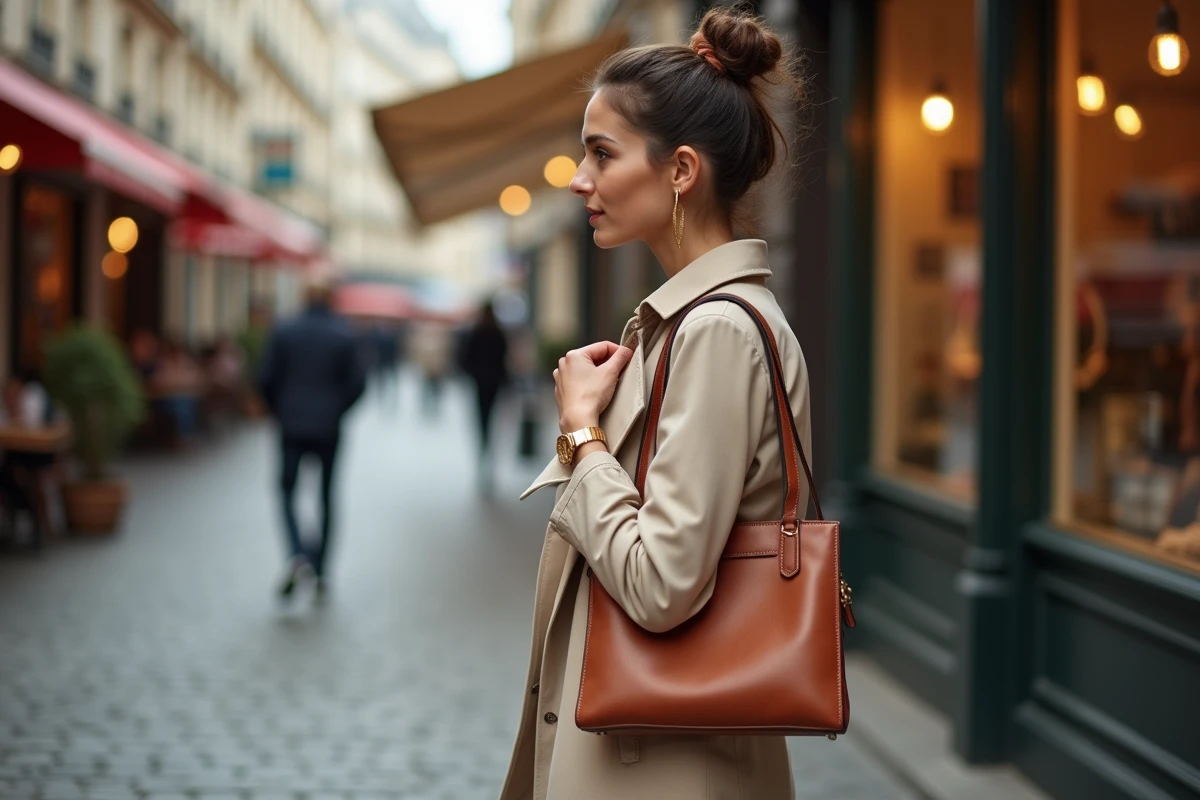
A choker visually elongates a short neck only if it remains thin. In a wide or rigid version, it produces the opposite effect and shortens the silhouette. For narrow shoulders, a bag worn diagonally balances the proportions, while a vertical tote bag accentuates the narrowness.
The operational rule: one bulky accessory per area of the body. If wearing an oversized brooch on the bust, lighten the neck and wrists. If choosing dangling earrings, avoid a statement necklace. This approach, close to the elegant sobriety that dominates current trends, creates a readable style without overload.
You can explore DLG Fashion accessories to find pieces that work on this principle: clean lines, adaptable formats, and enough variety to test what suits your own silhouette.

Inclusive accessories: adapting design to real physical constraints
Wearing accessories with a body asymmetry, a hearing aid, a wrist device, or reduced finger mobility presents concrete problems that most collections ignore. The tiny clasps of bracelets, thin-stemmed earrings, and complex-buckle belts become daily obstacles.
Clasps and fasteners: the detail that blocks
A bracelet with a lobster clasp opens with one hand. A spring clasp bracelet requires two hands and a good grip. Choosing an accessory also means choosing its fastening system.
- Magnetic clasps allow for quick donning and work even with limited finger mobility, while remaining discreet on fine jewelry
- Tied scarves can replace clasp necklaces: a silk square wrapped around the neck is secured with a simple flat knot, accessible to almost everyone
- Sliding buckle belts (without prong) adjust with a single motion and are suitable for people wearing a hand orthosis or experiencing joint pain
Feedback varies on this point depending on the types of disabilities, but the principle remains the same: an accessory that cannot be worn alone ends up at the bottom of the drawer.
Hearing aids and earrings
Wearing ear contours does not prevent wearing earrings. Clip-on earrings, long associated with a dated style, are returning with contemporary designs. They attach to the lobe without interfering with the device. For implanted individuals, flat ear chips avoid any contact with the external processor.
Statement piece or accumulation: what the field shows in 2026
On social media, looks featuring a single statement piece (a bulky brooch, a sculptural bag, a pair of architecturally designed glasses) generate more visibility than maximalist stacks.
This shift towards elegant sobriety does not come from an aesthetic dictate. It responds to a practical constraint: in daily life, accumulating five bracelets and three necklaces takes time, generates visual noise, and complicates movement. A single strong piece, well-placed, is enough to anchor a style.

Choosing your strong piece according to context
In a professional context, a watch with a large dial or a geometric brooch on a solid blazer marks the look without excess. When going out, dangling earrings or a bag with an unusual texture (braided leather, upcycled material) take over.
The French Institute of Fashion noted in April 2026 an increased satisfaction among users of belt bags and keychain necklaces, multifunctional accessories that combine style and practicality. We wear fewer pieces, but each serves multiple functions.
Eco-responsible accessories: spotting sustainable materials without sacrificing style
The “Fashion Sustainability Trends 2026” report from McKinsey notes a marked preference for jewelry and bags made from recycled materials, with a particular appeal for locally crafted pieces. In practice, this translates to creators working with recycled brass, plant leather, or textile scraps to produce limited-edition accessories.
A well-designed upcycled accessory does not look like a compromise. The finishes matter as much as the intention: a polished recycled brass bracelet has the same shine as a conventional bracelet. The difference lies in the traceability of the material and the longevity of the piece.
- Check the exact composition on the label or product sheet, not just the “eco” label
- Prefer pieces without plating (plating wears off and reveals the base metal within months)
- Test the strength of clasps and seams before purchase, especially on bags made from alternative materials that do not yet have the track record of traditional leather
Everyday style is not built by multiplying pieces. It is built by choosing accessories that take into account the body, context, and longevity. An accessory that withstands three years of daily use without tiring or breaking validates all the selection criteria by itself.