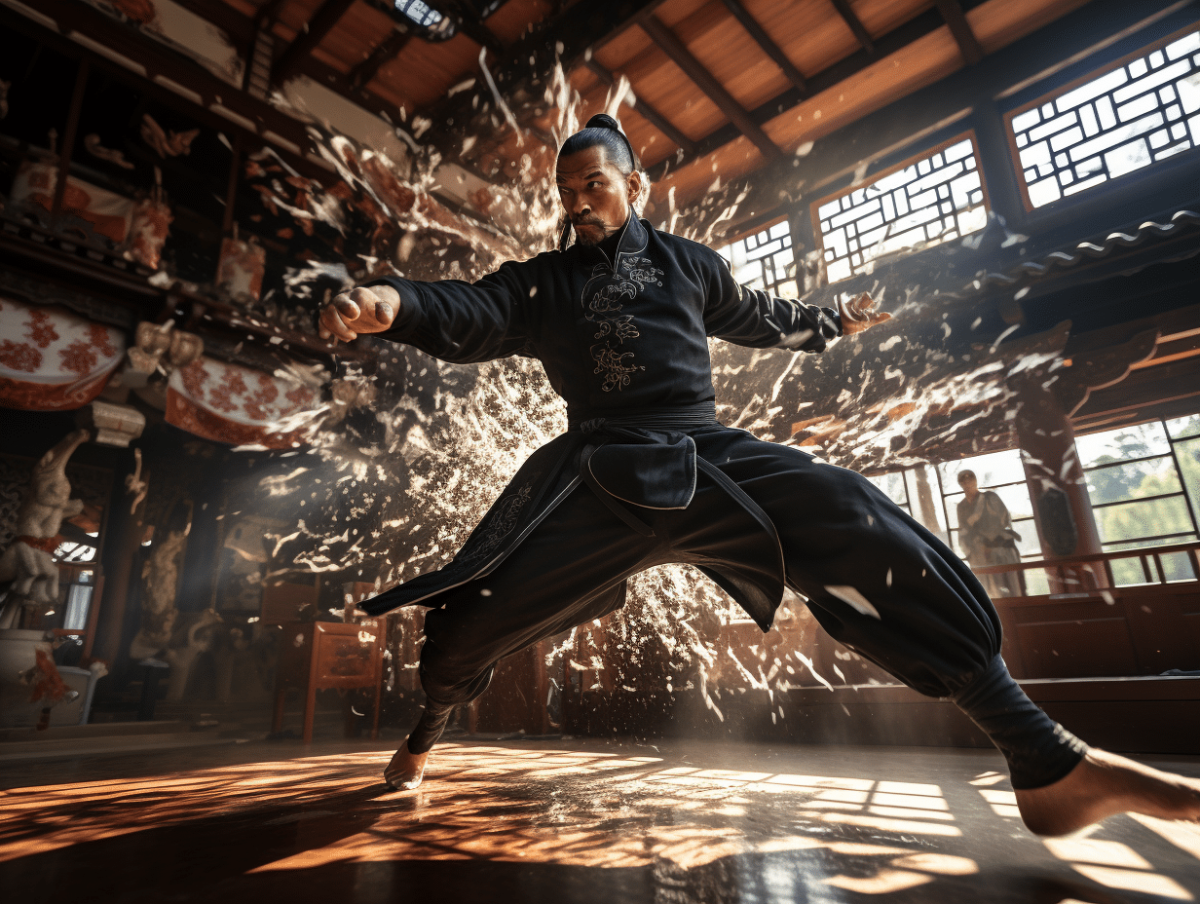
The world of Chinese martial arts is rich and varied, extending far beyond the borders of China. Within this fascinating realm, free boxing, or Sanda, stands out. This fighting style combines striking techniques, such as kicks and punches, with elements of wrestling, allowing for throws. Initially emerging within the Chinese military as a means of combat training, Sanda has evolved into a captivating competitive sport while retaining its deep martial roots. Its growing popularity around the globe attests to its dynamism and effectiveness.
The origins and evolution of Chinese free boxing
Sanda, or Chinese free boxing, originated in the Chinese military forces in 1924. Initially designed to improve soldiers’ combat effectiveness, this discipline has drawn from various martial influences. Combining techniques from Kung-fu, elevated platform fighting (Lei tai), traditional wrestling (Shuai jiao), elements of Judo, and Boxing, Sanda has developed into a comprehensive and formidable combat system.
Over time, what was once a strictly military martial art opened up to civilians and evolved into an international sport. In the 1990s and 2000s, Sanda crossed the borders of China, gaining worldwide recognition. Fighters such as Liu Hailong, Cung Le, Zabit Magomedsharipov, and Moussa Niang have contributed to its prominence by making their mark on the international scene, thus becoming iconic figures of this practice.
Defined as a sporting discipline, Sanda is divided into two main training axes: sport training and martial training. Sport training focuses on the competitive aspect, with precise rules and a secure environment. In contrast, martial training emphasizes self-defense, effectiveness in real situations, and technical refinement.
The symbolic place for Sanda training is known as The Circle. This dedicated space serves as a ground for learning, improvement, and confrontation. It is here that practitioners come to forge their bodies and minds, in pursuit of an ever-deeper mastery of this complex and demanding art, which plays out on both physical and mental levels.
Techniques, rules, and philosophy of free boxing
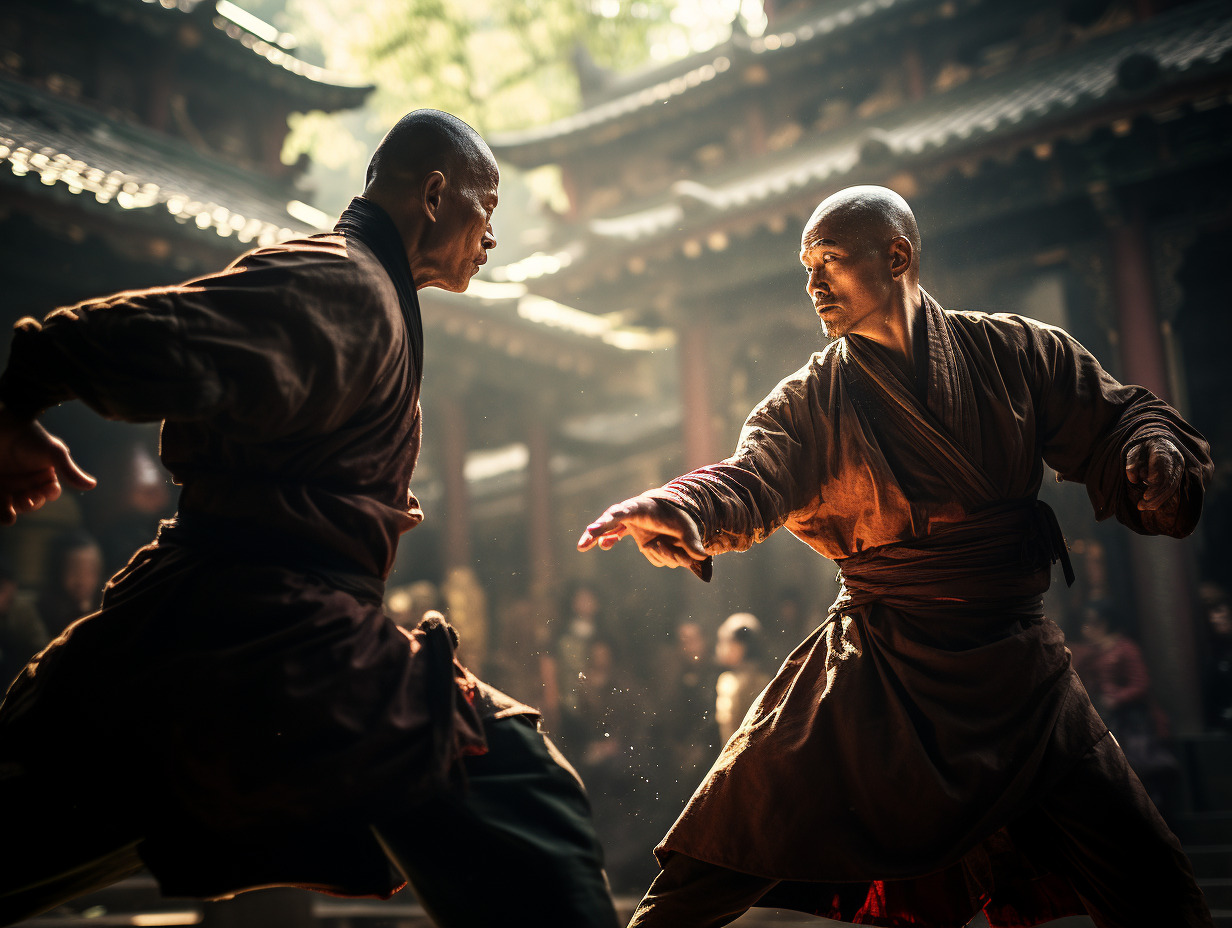
Sanda, or free boxing, is characterized by a blend of techniques borrowed from kickboxing, boxing, and kung-fu, creating a dynamic and fluid fighting style. Athletes are allowed to use a wide range of movements, including shooters, punches, throws, and grabs. The technical richness of this martial art allows for complete bodily expression, where the precision of strikes combines with the power of throws.
Regulatory-wise, fights take place on a square platform or in a ring, and are divided into 2 to 3 rounds. Victory is achieved either by K.O. or by points accumulated through the variety of allowed strikes. However, the discipline imposes clear limits: elbow strikes, knee strikes, as well as strikes to the back of the head, neck, groin, in front of the knee, and on the spine are strictly prohibited. Fighters are equipped with appropriate protective gear: helmet, cup, mouthguard, chest protector, gloves, and shin guards, ensuring the safety of the athletes.
Sanda, as a component of Chinese martial arts, also carries a rich philosophy. It aims for the development of optimal physical condition, speed, concentration, endurance, precision, power, and coordination. These physical and mental benefits align with self-defense principles and reflect the holistic approach of Chinese martial arts. Variants such as Sanda light and classic Sanda offer accessibility to all levels of practitioners, thus highlighting the discipline’s commitment to inclusivity and adaptability.