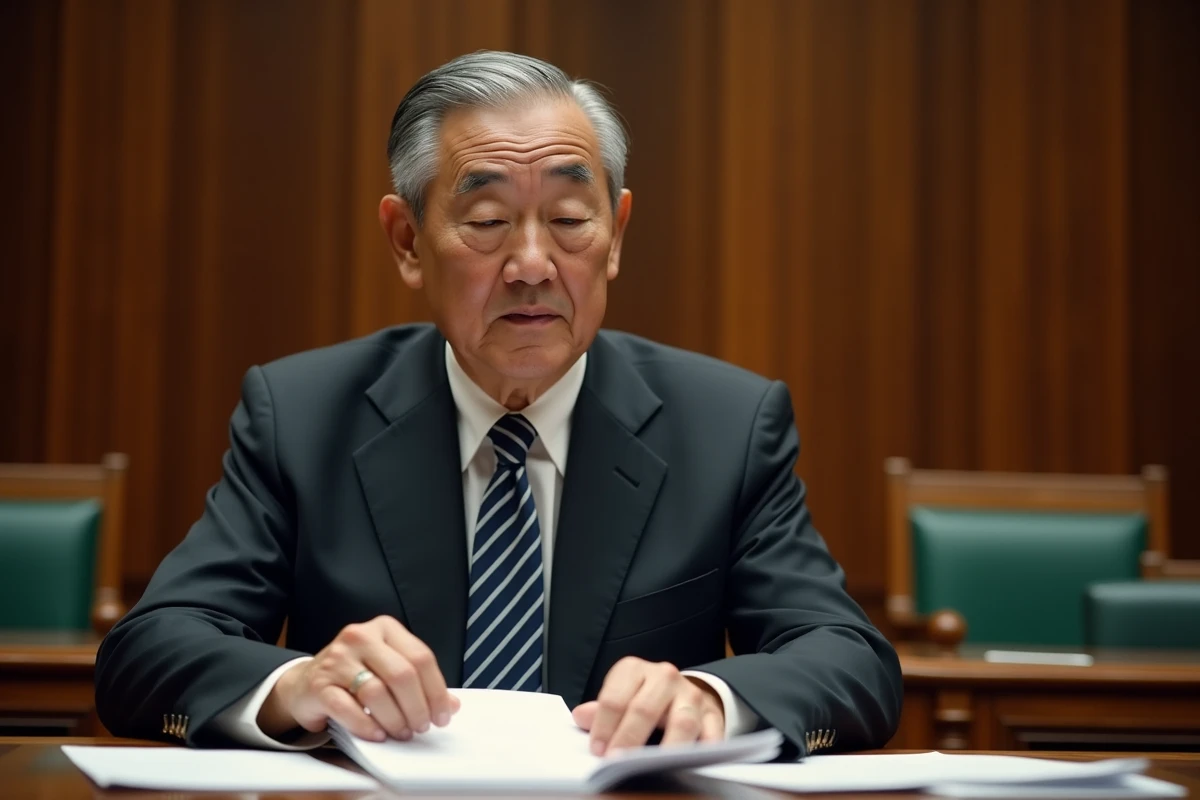
A Japanese Prime Minister can be replaced without consulting any voters, simply by a vote from a small circle of lawmakers from the ruling party in the House of Representatives. Since the capitulation of 1945, only one party, the Liberal Democratic Party (LDP), has governed almost exclusively, even though the Constitution imposes a strict separation of powers and confines the emperor to a ceremonial role. Yet, behind this apparent solidity, the country experiences a regular waltz of Prime Ministers and a growing disinterest in the polls.
The historical roots of the Japanese political system: legacies and breaks
It is impossible to ignore the strength of the past in Japan. The emperor has embodied national unity for generations, but he has been gradually sidelined from the concrete levers of power. Reduced to a symbolic role, a result of a radical turning point in 1945 under American control. The country then inherits drastic upheavals: the large industrial conglomerates, the famous zaibatsu, are dismantled, and the old power structures are swept away. Everything accelerates around an institutional overhaul guided by the occupation, which lays the foundations for a new political balance.
The adoption of the 1946 Constitution marks this break: the state dons a parliamentary regime, formally prohibits war through Article 9, and assigns the emperor a strictly protocolary role. This founding pact outlines a unique framework in Asia, caught between rooted traditions and international pressure. For a detailed analysis of these changes, see this file on the political system of Japan.
The early figures of the post-war era, Yoshida, Hatoyama, Kishi, embody this new political age, far from imperial preeminence. Gradually, society opens up to new rights. The political dynamic is then forged at the intersection of a dense political culture and a permanent Western influence. From the transformation of administration to the overhaul of civil rights, post-1945 Japan develops a model that is never quite fixed, always in question.
How does democracy function in Japan today? Institutions, parties, and electoral processes
At the center of the Japanese democratic game is the Diet, a bicameral parliament that ensures national representation. It is organized around two main chambers:
- The House of Representatives, where members are elected every four years
- The House of Councillors, whose term lasts six years, with partial renewal every three years
The Prime Minister holds executive power and owes his position to the assembly, never to a direct popular electorate. The emperor intervenes for the appointment, but his function remains devoid of political power.
The political landscape has been dominated by the Liberal Democratic Party (LDP) for nearly seventy years. Its preeminence is explained by the electoral mechanics: a hybrid voting system, mixing proportional representation and single-member districts, which favors the incumbent forces. Other parties, whether social-democratic, democratic, or communist, struggle to establish themselves durably against the inertia of the system.
To better understand the structure of political games and elections, here are the key factors to keep in mind:
- The right to vote is granted to citizens from the age of 18 for the lower house
- The Prime Minister emerges from a majority game in the Diet, never through a direct vote from the people
- Influential networks and groups like Nippon Kaigi shape long-term strategies, weighing especially on conservatives
- Despite recurring media scandals, the LDP retains control over power and dominates parliamentary coalitions
However, a counter-power exists with the Supreme Court. Its role is to verify the compatibility of laws with the Constitution, even though it often acts with extreme restraint. Meanwhile, electoral participation, frequently below 60%, reveals a persistent mistrust of the political system and the real capacity for elite renewal.

Contemporary challenges: between stability, reforms, and citizen aspirations
The apparent solidity of the Japanese model sometimes sets a deceptive scene. For behind institutional stability, other logics come to erode its foundations. The rapid aging of the population shakes the entire structure: pressure on pension funding, lack of young workers, intergenerational relations to be rethought, the country must invent new responses without losing its international momentum.
The diplomatic scene also weighs on the debates. Tense relations with China or North Korea reignite the national debate on the revision of Article 9, that famous constitutional lock against direct remilitarization. While the partnership with the United States structures the security of the archipelago, it de facto limits its strategic autonomy in a tense regional context.
In the face of these challenges, society expresses a need for renewal. The declining participation rates, visible fatigue towards the political class, the controversies making headlines, all fuel a skepticism that weakens the democratic dynamic. Yet, civil society is inventing alternative paths: new ecological collectives, struggles for gender equality, mobilization against precariousness. These movements aim to reinject energy, bringing neglected themes back to the heart of the public space. Today, Japan moves forward, sometimes with hesitant steps, sometimes in a collective surge, caught between fidelity to its balances and a breath of renewal. The archipelago writes its next chapter, under the watchful eye of those who refuse to believe in an immutable democracy.