
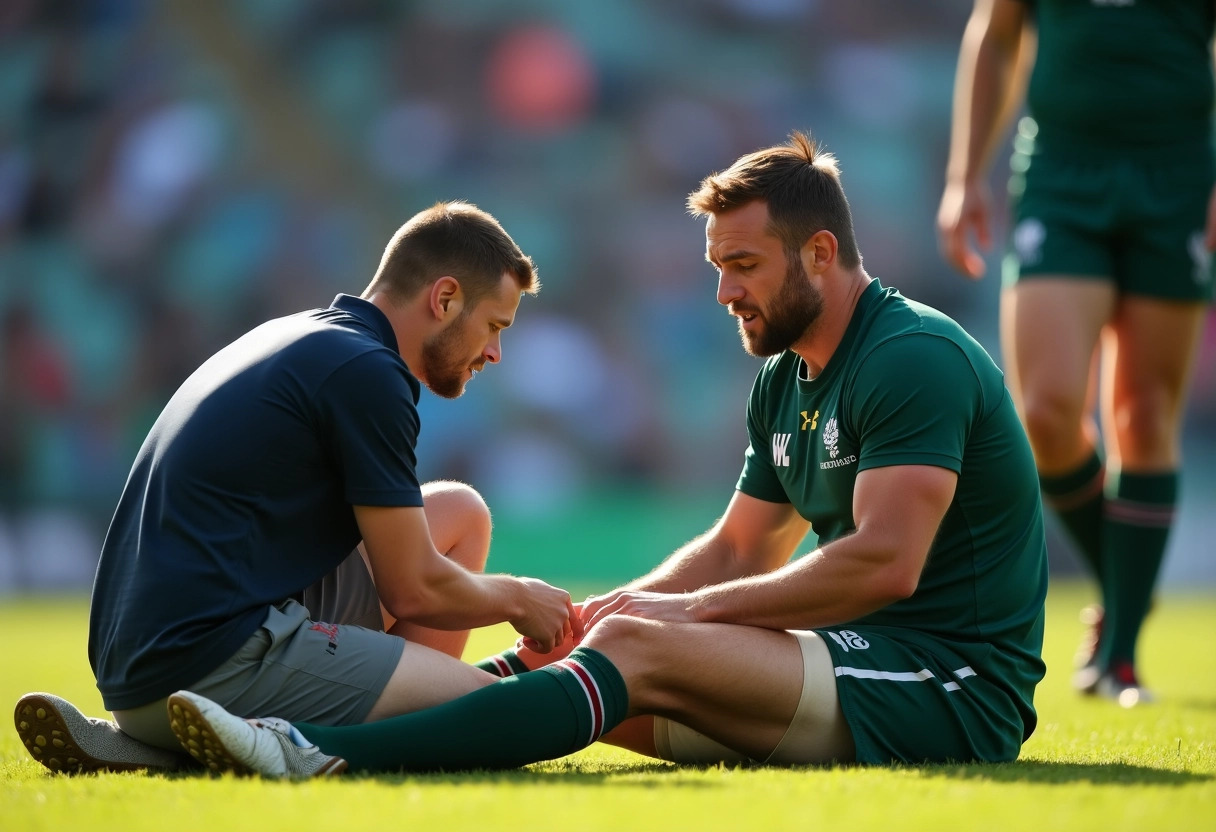
Professional rugby players, subjected to intense matches and rigorous training, face significant health challenges. Physical injuries, such as concussions and torn ligaments, are common. These traumas can have long-term consequences, affecting the athletes’ careers and quality of life.
In addition to physical injuries, rugby players must also manage the mental and emotional pressure related to performance and high expectations. Stress, anxiety, and depression are often overlooked realities in this demanding sport. Medical teams and coaches play a fundamental role in preventing and managing these challenges to ensure the overall health of the players.
The most common injuries among professional rugby players
Professional rugby players, subjected to extreme playing conditions, encounter frequent and varied injuries. Among these, concussions stand out for their severity and recurrence. Jamie Cudmore, a former player for ASM Clermont Auvergne, suffered several concussions within two weeks, illustrating the inherent risks of this sport. Steve Thompson, a former England international, also speaks of the long-term consequences, suffering today from early dementia.
Neurodegenerative diseases
Former international rugby players are at an increased risk of developing neurodegenerative diseases. A study conducted by Willie Stewart compared 412 former Scottish international rugby players to 1,200 people from the general population. The results show that these players are two and a half times more likely to develop such diseases. The risk of contracting Parkinson’s disease is three times higher, while the risk of motor neuron disease is fifteen times greater.
Tragic cases and physical impact
The death of Nicolas Chauvin, a promising player from Stade Français, following a collision during a match, highlights the immediate physical dangers.
- The case of Jonah Lomu, often compared to a Twingo launched at 30 km/h in terms of impact, illustrates the brutality of the contacts.
- Sam Warburton, forced to end his career at 29 due to repeated injuries.
- Yoann Gravier’s death cause reflects the devastating impact on players’ health.
Prevention strategies and regulatory innovations
The National Rugby League (LNR) has adopted concrete measures to minimize the risk of injuries, particularly concussions. In collaboration with Vogo, the LNR provides club doctors with advanced technology for quicker and more accurate concussion detection. This technological innovation offers real-time monitoring tools, thereby reducing the risk of long-term complications.
Initiatives by the French Rugby Federation
The French Rugby Federation (FFR), led by Didier Retière, places player safety at the heart of its concerns. According to Retière, safety must be associated with the sense of the game. The FFR is developing training programs to raise awareness among players and coaches about best practices.
Medical symposium in Marcoussis
In January, the Marcoussis center hosted a medical symposium organized by World Rugby. This gathering allowed for the exchange of best practices and discussions on regulatory innovations planned for 2025. Brett Gosper, CEO of World Rugby, stated that there are no statistics supporting an increase in injuries, but emphasized the need for heightened vigilance.
Future regulations and experts
The new rules that World Rugby plans to implement in 2025 have been analyzed by Mathieu Blin, a consultant for Canal +. These rules aim to reduce violent contacts and limit the risks of serious injuries. Pierre Rabadan, a former French international, highlights the importance of a gradual adaptation to ensure a balance between safety and the spectacle of the game.