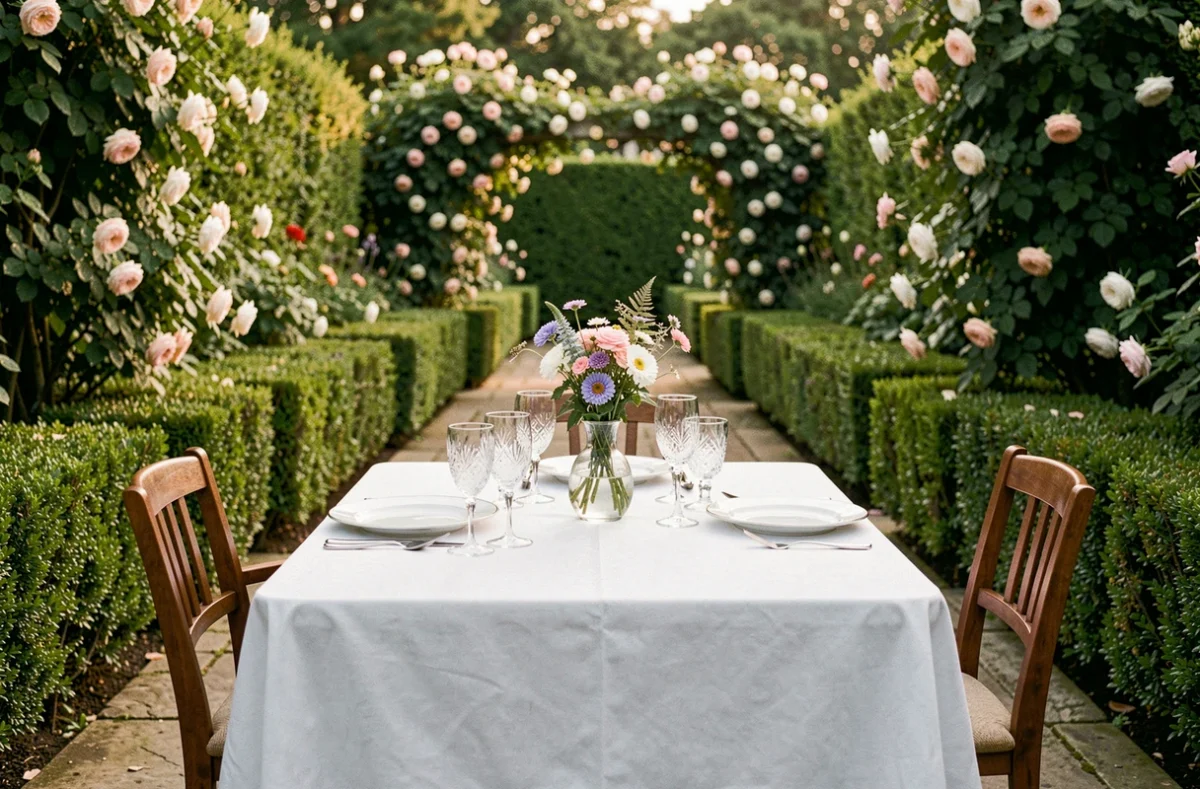
French gastronomy has a long-standing connection with plants, but this connection has often been merely decorative. White tablecloths under the linden trees, flowering arbors in the background of a classic menu. In recent years, the relationship between the garden and the plate has undergone profound changes, driven by new regulatory constraints and a reevaluation of supply chains.
Organic Waste and On-Site Composting: What Regulations Change for Restaurants with Gardens
Since January 1, 2024, food service professionals must sort their organic waste at the source, with no minimum production threshold. This obligation, often summarized as a logistical constraint, actually alters the operations of establishments with green spaces.
A restaurant with a private garden can consider on-site composting, separate collection, or methanization depending on its site configuration. Peels, preparation leftovers, and green waste from the garden then join the same circuit, which was not systematic before.
This convergence between cultivated space and organic waste management provides a tangible advantage to establishments located in a green setting. A vegetable garden or orchard adjacent to the restaurant no longer serves solely to produce a few herbs: it becomes a link in the cycle of organic material recovery. On les-jardins-de-camille.fr, this interplay between landscape and culinary requirement illustrates how an exceptional garden structures the entire gastronomic experience.
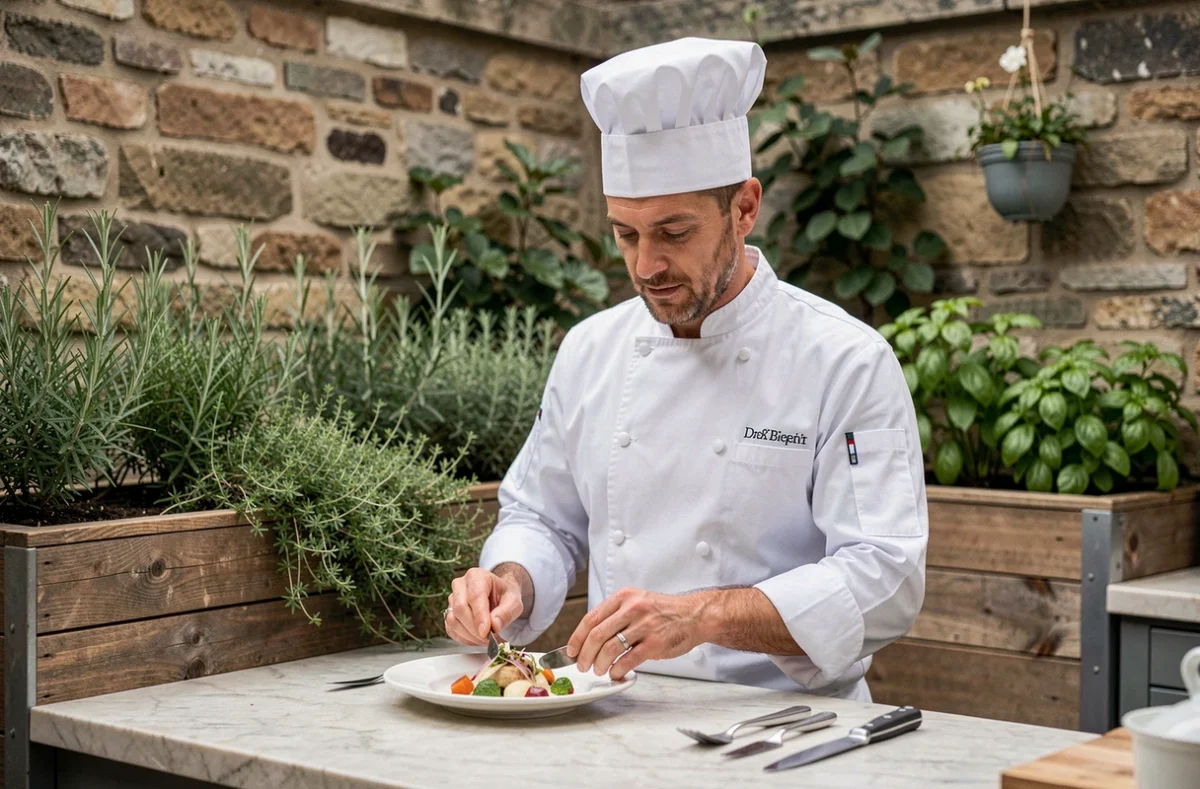
Supply “from Garden to Plate”: On-Site Vegetable Garden or Partner Farm
The phrase “from garden to plate” encompasses very different realities depending on the establishments. Some cultivate a vegetable garden just a few meters from the kitchen. Others rely on a network of distant farms, with weekly deliveries.
The Michelin guide describes the case of La Borie in Paris, whose kitchen sources from a farm in Haute-Loire. The delivery vehicle leaves with the peels destined for the farm animals. This closed circuit raises concrete questions:
- Agricultural uncertainties (drought, late frost, pests) limit the regularity and diversity of available products, forcing the chef to constantly adapt the menu.
- The logistical cost of short supply chains over several hundred kilometers remains significantly higher than purchasing from a traditional wholesaler.
- Real traceability of the product, from the plot to the plate, requires rigorous documentation that not all establishments can provide.
An adjacent garden simplifies some of these constraints, but does not eliminate them. An on-site vegetable garden covers only a fraction of a professional kitchen’s needs, even for a modestly sized establishment. Root vegetables, proteins, and dairy products come from elsewhere.
Plant-Based Cuisine in High Gastronomy: A Parisian Turning Point
In 2025, Alain Passard announced that Arpège would no longer serve meat or fish, solidifying a plant-based direction that began in the early 2000s. This choice, championed by one of the most recognized chefs in the French scene, marks a symbolic shift for Parisian high gastronomy.
Plant-based cuisine is no longer a menu option but a central positioning for certain starred tables. The garden, in this context, shifts from a mere landscape enhancement to a primary source of culinary inspiration. The strict seasonality of the vegetable garden dictates the rhythm of the menus.
This movement, however, remains limited to a specific segment of the restaurant industry. The majority of restaurants with gardens in Île-de-France continue to offer classic menus where plants accompany animal protein without replacing it. The promise of a meal “in the garden” does not automatically mean a plant-centered cuisine, and this distinction deserves to be clearly stated.
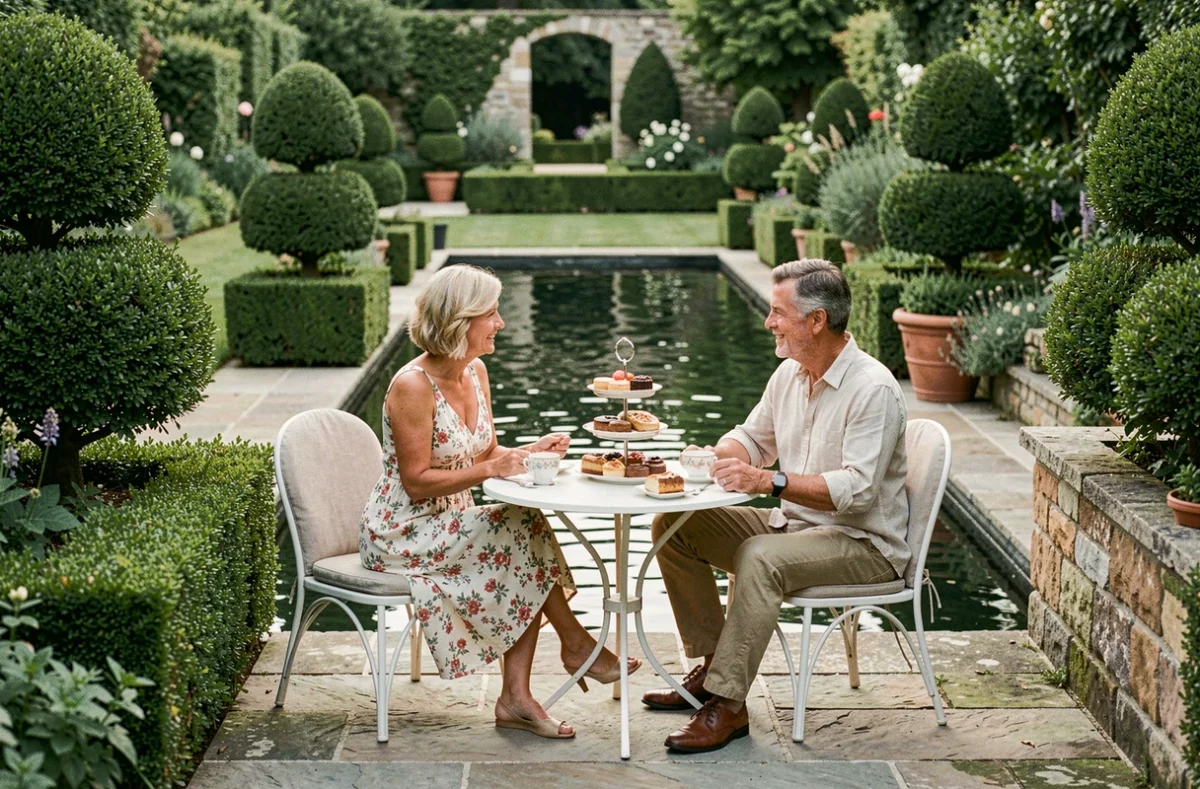
Public Terrace or Private Garden: A Distinction Rarely Made Clear
In Paris, terraces installed on public roads are subject to municipal authorization. The City of Paris publishes a dataset geolocating authorized terraces, whether permanent or seasonal. This information, available as open data, allows for the distinction between two types of experiences often confused in guides.
A sidewalk terrace, even carefully landscaped, remains a public space subject to noise, foot traffic, and time regulations. A private garden offers a controlled environment from start to finish: acoustics, lighting, vegetation, furniture. The sensory experience is incomparable.
For the customer seeking a true haven of peace, the legal nature of the outdoor space conditions the quality of the time spent at the table. Establishments with their own enclosed and landscaped garden provide an immersion that urban terraces, charming as they may be, cannot replicate.
Concrete Criteria for Evaluating a Restaurant with a Garden
- Check if the garden is a private enclosed space or an authorized terrace on public land, which radically changes the sound ambiance.
- Inquire about the actual link between the garden and the kitchen: productive vegetable garden, herbs, or merely a landscape decoration without impact on the menu.
- Observe the seasonal management of the space: a garden maintained year-round reflects a sustainable investment, not a seasonal trend.
- Ask if the establishment practices composting or the valorization of its organic waste on-site, a sign of a coherent approach between gastronomy and environmental management.
The proliferation of addresses highlighting a green setting makes it more challenging for consumers to sort through options. Between the vegetated rooftop in the Marais and the wooded estate on the outskirts, promises look similar on social media. The differences reveal themselves at the table, on the plate, and in the silence of the garden.