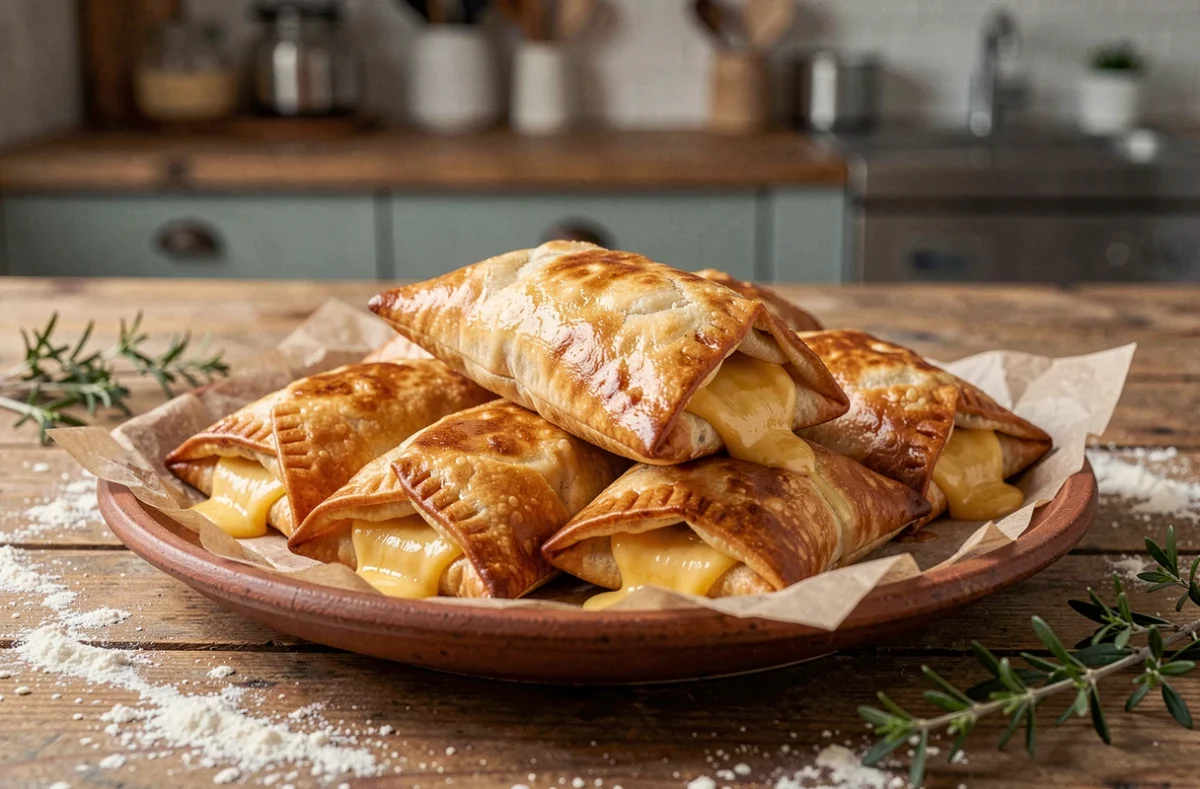
The Mauritian cheese samosa is a triangular pastry whose filling replaces the classic spicy toppings (meat, fish, vegetables) with melted cheese, sometimes mixed with mashed potatoes. In Mauritius, this type of samosa is part of street food, sold at market stalls alongside dholl puri and other savory fried snacks.
The cheese version stands out for its simplicity: few ingredients, an easy folding technique, and quick frying.
Cheese filling of the Mauritian samosa: what changes compared to the classic samosa
In a traditional samosa, the filling is based on a mixture of potatoes, spices (turmeric, coriander, cumin), and often meat or tuna. The cheese version disrupts this logic: cheese becomes the structuring element of the filling, not just an addition.
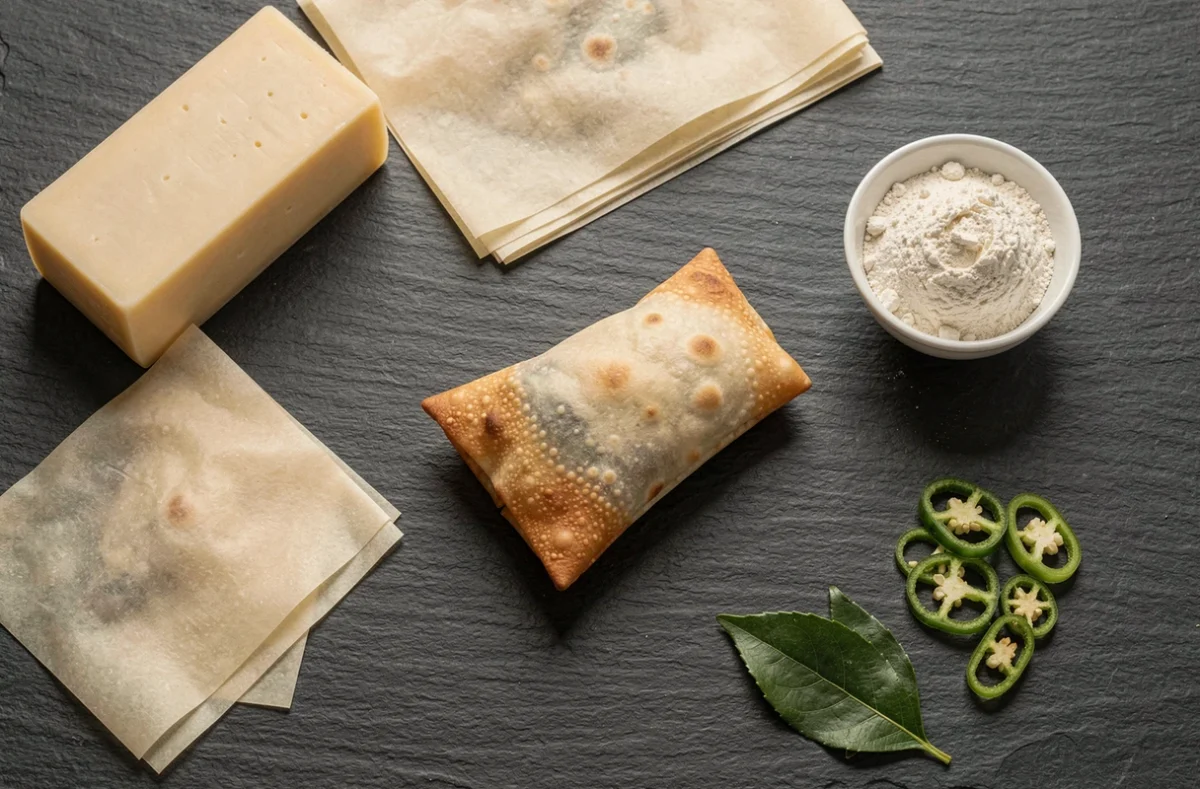
The cheese used in Mauritius is generally a firm cheese that melts without running, such as grated Gruyère or Emmental. Some cooks add corn kernels for crunch, but this addition remains optional. The idea is to achieve a filling that stays intact inside the pastry triangle during frying, without escaping through the edges.
The potato acts as a binder. Cooked in water and then roughly mashed, it absorbs the excess moisture from the cheese and gives body to the filling. Without it, the cheese alone would tend to melt too quickly, making the samosa difficult to handle. If you’re looking for a complete recipe for Mauritian cheese samosa, this potato-cheese duo forms the technical foundation.
One point that online recipes rarely mention: the filling must be cold before folding. A warm filling softens the dough and causes tears during cooking. Preparing the filling the day before and storing it in the refrigerator also makes folding easier.
Homemade samosa dough or brick sheets: which choice for a Mauritian result
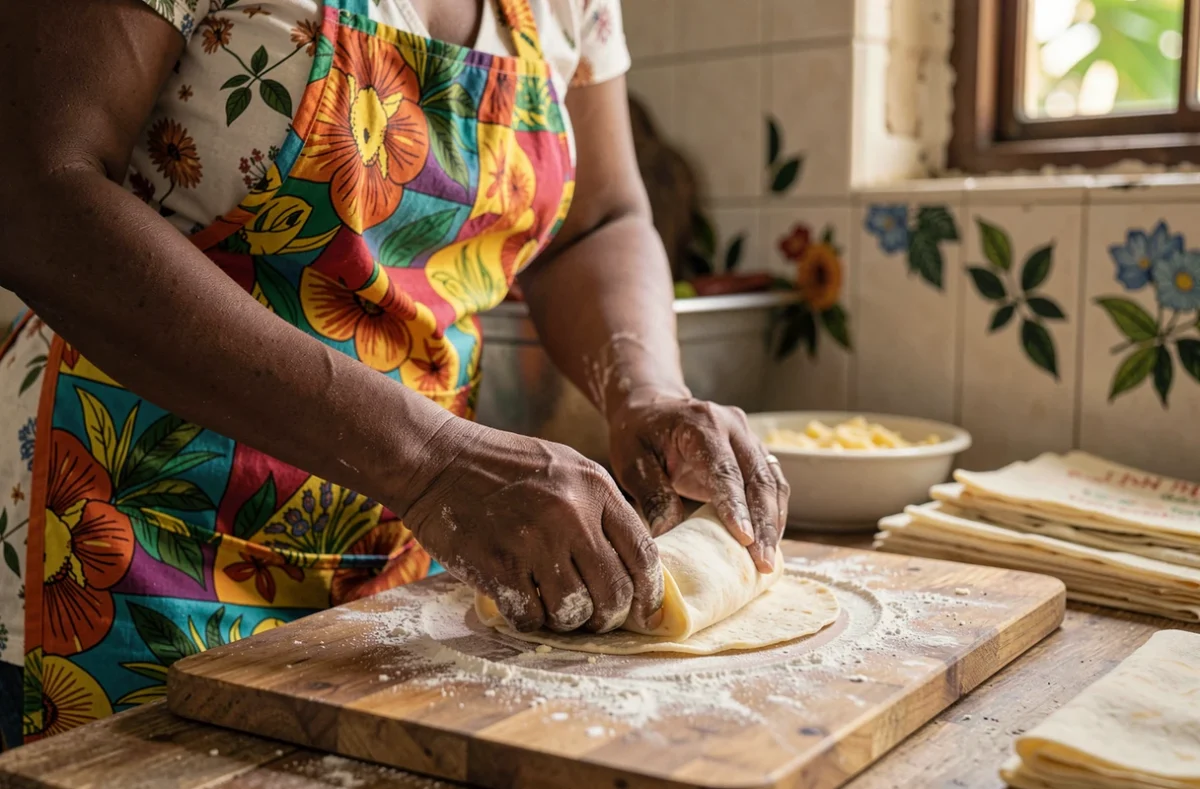
The traditional samosa dough is made with wheat flour, water, a pinch of salt, and a drizzle of oil. It is kneaded until a soft, non-sticky ball is formed, then rolled out thinly before being cut into rectangular strips. This homemade dough yields a thicker and crispier result than industrial brick sheets.
Brick sheets are an acceptable shortcut, not an equivalent. They produce a thinner, crunchier samosa, resembling a spring roll more than a Mauritian market snack. The texture difference is clear: homemade dough retains a slight softness beneath the crust, while the brick sheet remains uniformly dry and brittle.
To replicate the street texture, the homemade dough is worth the effort. Kneading takes about ten minutes and requires no special equipment. The thickness of the rolled-out dough matters: too thin, the dough will tear during frying; too thick, the center remains doughy.
Cutting and sizing the dough strips
The dough is rolled out into a rectangle, then cut into strips about three fingers wide. Each strip receives a spoonful of filling at one end. The triangular folding is done by folding the dough diagonally, step by step, as one would fold a flag. The final edge is sealed with a mixture of water and flour, which acts as an edible glue and prevents the samosa from opening in the oil.
Frying: oil temperature and common mistakes
Frying is the only authentic cooking method for the Mauritian samosa. Neutral vegetable oil (sunflower, peanut) is the most common. The oil temperature determines the quality of the result, and this is where most failures occur.
- Oil that is not hot enough soaks the dough in fat: the samosa becomes heavy, soft, with a pronounced oily taste. Test with a small piece of dough that should rise and bubble immediately.
- Oil that is too hot browns the surface in seconds but leaves the inside raw. The cheese doesn’t have time to melt properly.
- The right temperature is at medium-high heat, with regular bubbles around the samosa without instant coloring. A few minutes of cooking on each side is enough to achieve an even golden color.
Do not overcrowd the pan or pot. Too many samosas submerged at once lower the oil temperature, leading back to the absorption issue. Four to five pieces at a time is a good limit for a standard-sized container.
Accompaniments and variations of the cheese filling in Mauritius
The cheese samosa is traditionally served with one or more condiments. Chili paste (rougail piment) is the most common companion. A fresh coriander chutney or a sweet and sour sauce complements the dish for those who prefer a sweet-sour contrast.
The filling itself can accept additions without losing its Mauritian identity:
- Corn kernels for a sweet touch and crunch.
- Finely chopped green onions, which flavor the filling without weighing it down.
- A hint of chopped fresh chili for spice lovers, replacing chili powder.
In Mauritius, stalls often offer several types of samosas side by side: cheese, potato, tuna, meat. Checking the filling before buying is a local habit, as the versions look visually similar. This detail, noted in travel guides for vegetarians, helps avoid unpleasant surprises.
The Mauritian cheese samosa holds its place in street food because it combines a convenient format, a low-cost filling, and quick cooking. Reproducing this result at home relies less on a secret ingredient than on three precise actions: a cold filling, dough of even thickness, and oil at the right temperature.